VeganScore Explained: How VeganMapAI Rates Every Restaurant
general · 6 min · 2026-03-11
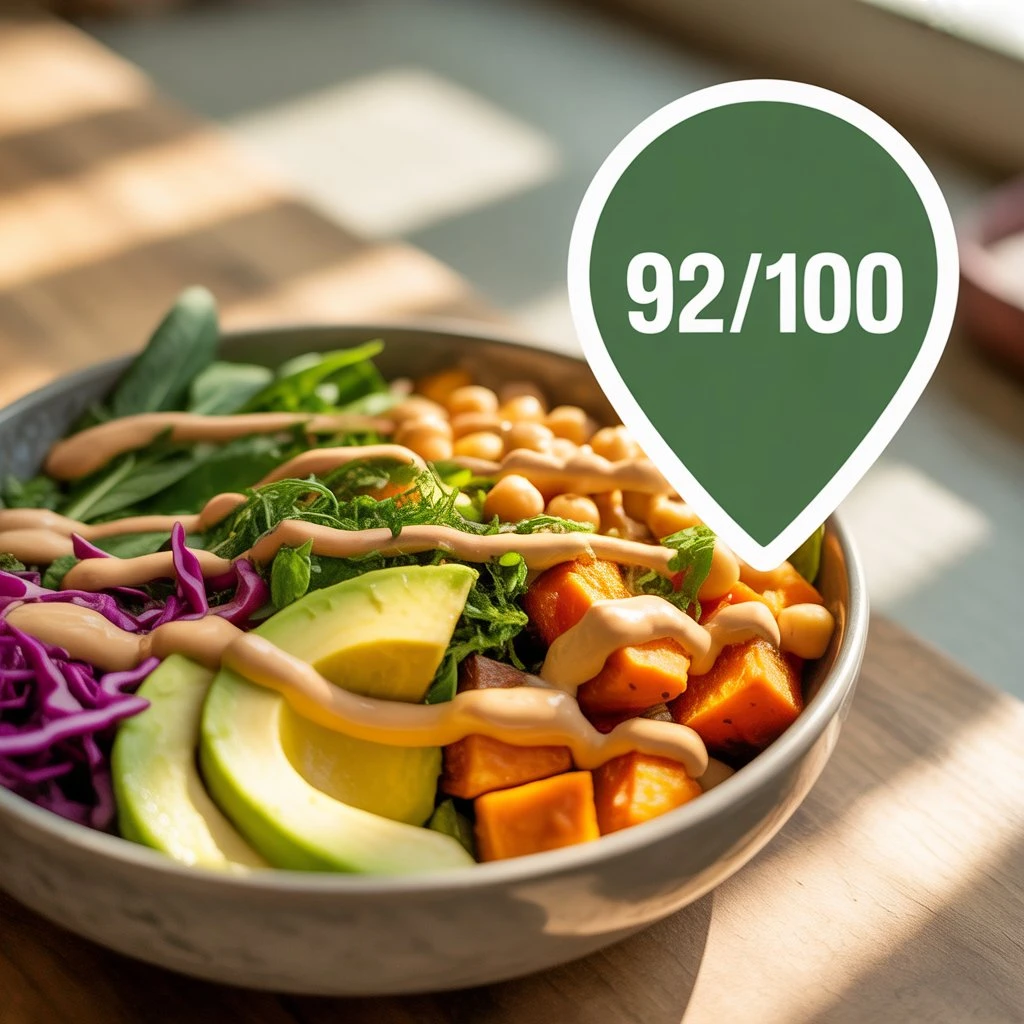
You've been there before. You find a restaurant online that says it's vegan-friendly, you make the trip, and then you're standing at the counter realizing the "vegan" burger is cooked on the same grill as everything else — or half the menu items you were excited about aren't actually available.
Finding a restaurant that truly understands vegan dining shouldn't require a research project. That's exactly why we built the VeganScore.
Every restaurant in the VeganMapAI database — over 473,000 across the US — is assigned a VeganScore from 0 to 100. It's not a popularity rating. It's not based on one person's review. It's a consistent, AI-powered assessment of how well a restaurant actually serves vegan diners. Here's exactly how it works.
What Is the VeganScore?
The VeganScore is a number between 0 and 100 that tells you, at a glance, how confidently you can walk into a restaurant as a vegan diner.
A score of 90+ means you're walking into a place that has been built around plant-based dining — extensive menu, clearly labeled ingredients, staff who know what they're talking about. A score of 40 means the restaurant has some vegan options, but there are gaps: maybe the menu is limited, maybe ingredient labeling is unclear, maybe the kitchen doesn't have strong separation practices.
The higher the score, the more confidently you can dine. It's that simple.
Curious what your favorite restaurant scores? Search it on VeganMapAI — it's free.
What Goes Into the VeganScore?
Our AI evaluates every restaurant across six factors, each weighted by how much it actually affects your experience as a vegan diner:
- Vegan Coverage: How many vegan options are on the menu, and how varied they are, 30% weight
- Vegan Quality: How creative and well-executed the vegan dishes are, 25% weight
- Ingredient Clarity: How clearly the restaurant labels what's in each dish, 15% weight
- Cross Contamination: How seriously the kitchen handles separation of vegan and non-vegan food, 15% weight
- Staff Knowledge: Whether staff are trained to answer vegan and allergy questions confidently, 10% weight
- Restaurant Quality: Overall dining experience, 5% weight
Vegan Coverage leads the scoring because it's the most fundamental question: does this restaurant actually have options for you? Quality comes second because a small menu of truly excellent dishes beats a long list of mediocre ones. Ingredient Clarity and Cross Contamination together account for 30% — weighted deliberately because they matter to anyone who needs to know exactly what's on their plate.
What Does a Low Score Mean?
A low VeganScore does not mean a restaurant is bad. It means one of a few things: the vegan options are limited, the ingredient data available to us is incomplete, or it's a non-vegan restaurant with a handful of plant-based dishes rather than a dedicated offering.
We show you every restaurant — low scores included. The score is there to help you make an informed choice, not to restrict what you can explore. A 45-scoring Italian restaurant might still have one incredible pasta dish that's exactly what you're looking for on a Tuesday night. The score just tells you what to expect when you walk in.
Think of it this way: we show you everything. The VeganScore just tells you how confident you can be.
How Is the VeganScore Different from a Regular Review?
Standard reviews reflect one person's opinion from one visit on one day. They're valuable, but they're also inconsistent — one reviewer might care deeply about portion size while another focuses entirely on atmosphere.
The VeganScore evaluates every restaurant against the same six criteria, every time. It doesn't have a bad day. It doesn't get swayed by a particularly good dessert. And because our data is updated continuously, scores reflect current reality rather than a review someone left two years ago.
This consistency is what makes the score useful as a planning tool. When you're in an unfamiliar city trying to decide between three restaurants in twenty minutes, you don't need ten reviews to read through — you need a trusted signal. That's what the VeganScore is designed to be.
Does the Score Account for Allergies?
Yes. Ingredient Clarity and Cross Contamination are both scored factors, so the VeganScore naturally reflects how transparent and kitchen-safe a restaurant is — useful context whether you have strict dietary needs or simply want to know what you're eating.
How to Use the VeganScore When You're Exploring
The score works best as a filter, not a verdict. Here's how to think about it in practice:
- 80–100: Dedicated or near-dedicated vegan establishments. Walk in with full confidence.
- 60–79: Strong vegan options, generally knowledgeable staff, minor gaps in data or coverage. A reliable choice for most occasions.
- 40–59: Limited vegan options or incomplete data. Worth checking the detail — there may still be a great dish waiting for you, but go in informed.
- Below 40: Proceed with caution. Options are sparse or data is very limited. May still work for a flexible diner, but not ideal if you have strict requirements.
The Bottom Line
The VeganScore exists because "vegan-friendly" means something different on every menu, in every city, in every kitchen. We built a consistent way to measure it — across 473,000 restaurants — so you never have to guess again.
Whether you're a committed vegan, a flexitarian exploring plant-based options, or simply someone who wants to know what they're eating, the score is designed to give you one thing: confidence.
Explore what's near you. The data is waiting.
Ready to find your next trusted vegan meal? Explore the map and see scores for restaurants near you.